
The omega-3s are among the best-known fatty acids: we find them in fish, nuts and many supplements. But what are they, how much do we need and what does the “omega-6 to omega-3 ratio” we often hear about mean? In this guide you will find the basics, what officially applies in the European Union, what research shows and 6 things worth knowing.
What are omega-3s
Omega-3s are polyunsaturated fatty acids. The three most important are:
- ALA (alpha-linolenic acid): found in plant foods such as flaxseed and walnuts. The body cannot make it on its own, so we need to get it from our diet.
- EPA (eicosapentaenoic acid) and DHA (docosahexaenoic acid): found mainly in oily fish and seafood.
The body can convert only a small part of ALA into EPA and DHA. That is why the most direct source of EPA and DHA is fish.
Omega-3 at a glance
| Question | Answer |
|---|---|
| What is it? | Polyunsaturated fatty acids (ALA, EPA, DHA). |
| How much do we need? | EFSA considers 250 mg of EPA and DHA per day adequate for adults. |
| From food | 1–2 servings of fish a week, preferably oily fish. |
| Safe limit for supplements | Up to 5 g of EPA and DHA per day raise no safety concerns for adults (EFSA). |
| Approved EU claims | Yes, for the heart, the brain and vision (see below). |
Which foods contain them
| Food | What it provides |
|---|---|
| Sardines, anchovies, mackerel | EPA and DHA. Small, affordable fish with little mercury. |
| Salmon, trout, herring | EPA and DHA. |
| Flaxseed, chia seeds | ALA. Flaxseed is better absorbed when ground. |
| Walnuts | ALA. |
| Purslane and green leafy vegetables | ALA in smaller amounts. |
| Omega-3 enriched eggs | Small amounts of DHA, depending on the hens’ feed. |
According to EFSA, 1–2 servings of seafood a week (and up to 3–4 during pregnancy) are associated with health benefits. During pregnancy, choose small fish and avoid large fish with a lot of mercury, such as swordfish and shark.
The ω-6 to ω-3 ratio
Omega-6s are also essential fatty acids. We find them in seed oils (sunflower oil, corn oil), nuts and seeds. The Western diet contains far more ω-6 than ω-3, which is why their “ratio” is often discussed.
The American Heart Association (AHA) examined the issue in 2009. It concluded that ω-6 does not need to be reduced: when it makes up about 5–10% of calories, as part of a healthy diet, it is associated with better cardiovascular health. The practical conclusion is to increase ω-3 (fish, walnuts, flaxseed), not to “fear” ω-6. In the Mediterranean diet, olive oil as the main fat helps us not to overdo seed oils.
What officially applies in the European Union
There are approved health claims for omega-3s (Regulation (EU) 432/2012):
| Claim | Condition |
|---|---|
| EPA and DHA contribute to the normal function of the heart. | Daily intake of 250 mg of EPA and DHA. |
| DHA contributes to maintenance of normal brain function and to maintenance of normal vision. | Daily intake of 250 mg of DHA. |
A product may use these statements only if it provides the amount required by the Regulation.
What the research shows
- Prevention in healthy people: in the large VITAL study (25,871 adults, 1 g of omega-3 a day, about 5 years), the supplement did not significantly reduce major cardiovascular events overall. A secondary analysis showed fewer heart attacks, a finding that needs confirmation.
- High doses: in an analysis of 7 studies with more than 81,000 people (2021), omega-3 supplements were linked to a small increase in the risk of atrial fibrillation, mainly at doses above 1 g per day.
- Nutrition: eating fish as part of a balanced diet is consistently linked to better heart health.
The conclusion: omega-3s are valuable, but fish on the plate counts for more than a pill, and high-dose supplements should only be taken on medical advice.
6 things worth knowing
| What to know | Why |
|---|---|
| 1. Fish first | Two servings of fish a week, one of them oily, cover most people’s needs. |
| 2. EPA and DHA are what count | On the label, check how many mg of EPA and DHA the dose provides, not just how much fish oil. |
| 3. ALA is not the same | Plant omega-3s are useful, but only a tiny part of them becomes EPA and DHA. |
| 4. With food | Omega-3 supplements are best taken with a meal that contains fat. |
| 5. No excess | More than 1 g per day only on a doctor’s advice. |
| 6. Freshness | Keep the capsules away from heat and light. If they smell strongly rancid, do not use them. |
Who should be careful
- Anyone taking anticoagulants or antiplatelet drugs, or about to have surgery: ask your doctor first.
- Anyone with arrhythmias or atrial fibrillation: no high doses without medical advice.
- Fish allergy: fish oil supplements only after discussing it with your doctor.
- Pregnancy and breastfeeding: DHA is important, but your doctor should choose the supplement.
Omega-3 in Active Woman products
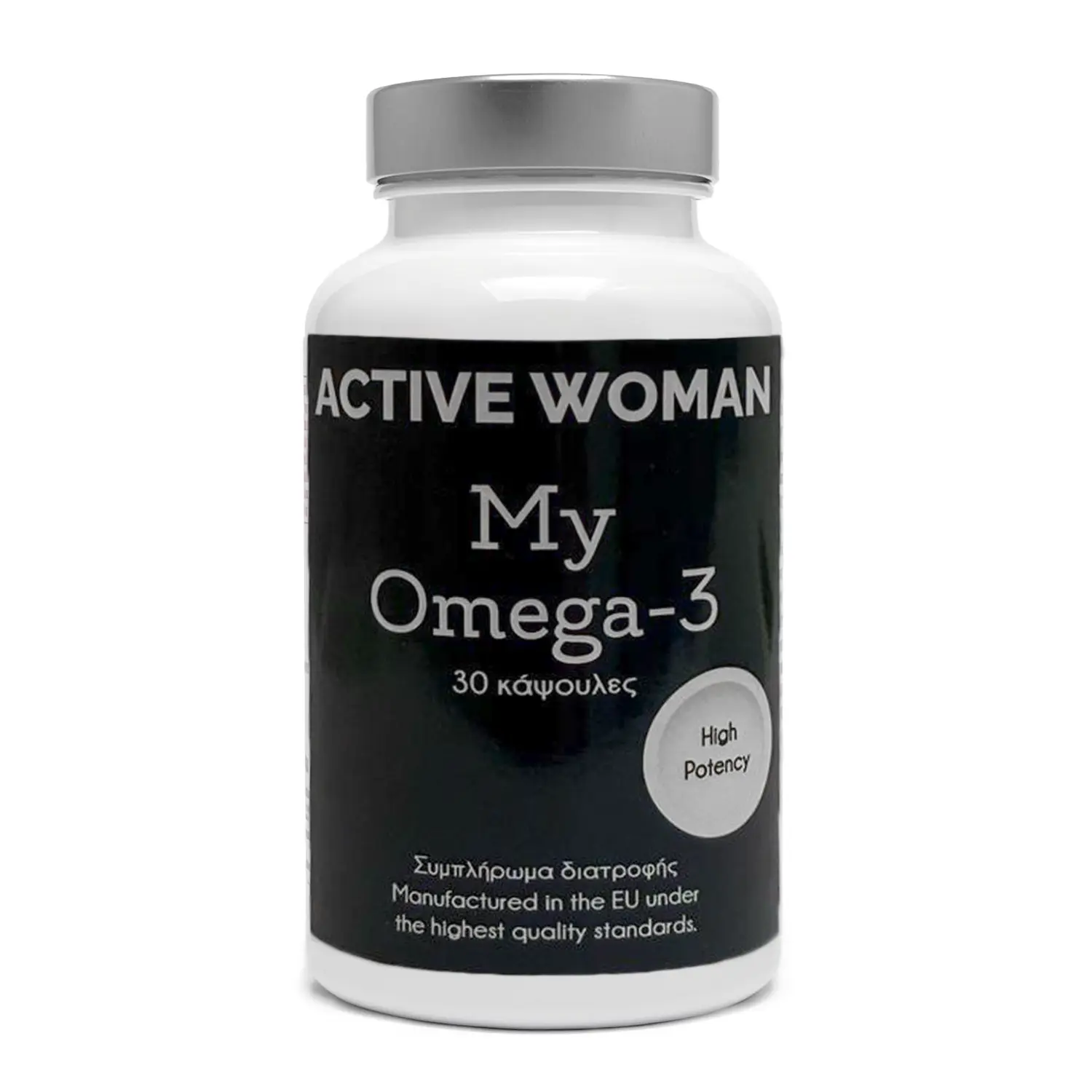
The My Omega-3 provides 1000 mg of fish oil per capsule, with EPA 350 mg and DHA 250 mg, and contains vitamin E. The product’s approved claims:
- EPA and DHA contribute to the normal function of the heart.*
- DHA contributes to the maintenance of normal brain function and to the maintenance of normal vision.**
- Vitamin E contributes to the protection of cells from oxidative stress.
*The beneficial effect is obtained with a daily intake of 250 mg of EPA and DHA. **The beneficial effect is obtained with a daily intake of 250 mg of DHA.
Food supplements should not be used as a substitute for a varied and balanced diet and a healthy lifestyle.
Read also
Find out more about oxidative stress, metabolism and probiotics and prebiotics. For a personalised programme, you can book an online appointment or start with the Digital Diet.
Frequently asked questions
What are omega-3s?
Polyunsaturated fatty acids. The main ones are ALA from plant foods and EPA and DHA from fish.
How much omega-3 do I need?
EFSA considers 250 mg of EPA and DHA per day adequate for adults. This is covered by 1–2 servings of oily fish a week.
Do I need a supplement?
If you eat fish regularly, usually not. If you do not eat fish, discuss it with your doctor or dietitian.
Are plant omega-3s enough?
ALA from flaxseed and walnuts is useful, but only a tiny part of it becomes EPA and DHA. People who do not eat fish can ask about an algae-based supplement.
What is the ω-6/ω-3 ratio?
The relationship between the two types of fat in the diet. The practical message is to increase ω-3, not to cut out ω-6.
Do they have side effects?
Usually mild, such as fishy burps or stomach discomfort. At high doses the risk of atrial fibrillation increases, so medical advice is needed.
Sources
- Regulation (EU) 432/2012 – List of authorised health claims.
- EFSA NDA Panel. Scientific Opinion on the Tolerable Upper Intake Level of EPA, DHA and DPA. EFSA Journal, 2012.
- EFSA NDA Panel. Scientific Opinion on health benefits of seafood consumption in relation to methylmercury. EFSA Journal, 2014.
- Manson JE. et al. Marine n-3 fatty acids and prevention of cardiovascular disease and cancer (VITAL). N Engl J Med, 2019.
- Gencer B. et al. Effect of long-term marine omega-3 fatty acids supplementation on the risk of atrial fibrillation. Circulation, 2021.
- Harris WS. et al. Omega-6 fatty acids and risk for cardiovascular disease: AHA Science Advisory. Circulation, 2009.
This article is for information purposes and is not a medical diagnosis, nor does it replace a doctor’s advice.
