
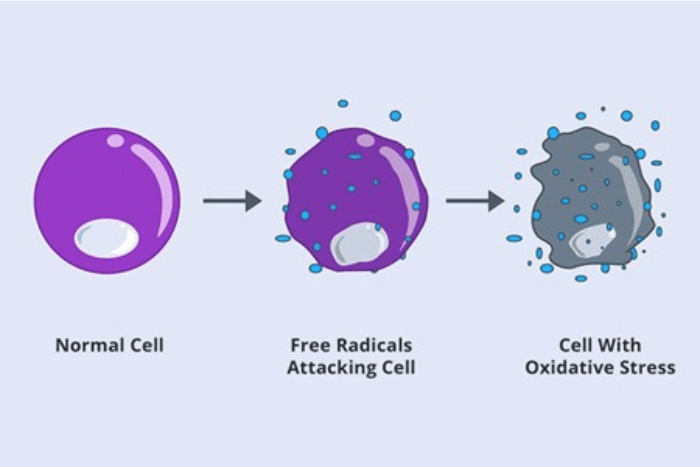
The oxidative stress and the free radicals are often heard in discussions about ageing, fatigue and nutrition. But what do they mean in practice? In this guide you will see what they are, what aggravates oxidative stress, 6 dietary habits for the body’s antioxidant defence and how it can be measured.
What free radicals are
During the normal functioning of the body, for example when metabolising food or exercising, free radicals are produced. In normal amounts they are useful, because among other things they take part in the body’s defence against microbes. The body keeps them under control with its own antioxidant mechanisms.
What oxidative stress is
Oxidative stress is the name given to the imbalance between the production of free radicals and the body’s antioxidant defence. In other words, the existence of free radicals is not bad. The problem is when more are produced than the body can handle.
In studies, prolonged oxidative stress has been associated with cell ageing and various chronic conditions.
What aggravates oxidative stress
| Factor | Why it matters |
|---|---|
| Smoking | It is one of the best-known factors that increase free radicals. |
| Environmental pollution | Exposure to pollutants burdens the antioxidant defence. |
| Poor diet | Little fruit and vegetables means fewer antioxidants from food. |
| Alcohol | Frequent consumption burdens the body. |
| Intense strain | Very intense exercise without rest, as well as general fatigue. |
| Certain medicines | Always in consultation with your doctor. Do not stop medicines on your own. |
Are more antioxidants better?
Not necessarily. Researchers stress that oxidative stress is a concept describing a balance, and not a reason for the indiscriminate intake of antioxidants in high doses. The first choice is a diet rich in plant foods and a lifestyle that does not burden the body.
Foods with antioxidants: where to find them
| Nutrient | Where it is found |
|---|---|
| Vitamin C | Citrus fruits, kiwi, peppers, broccoli, strawberries |
| Vitamin E | Nuts, seeds, olive oil |
| Polyphenols | Berries, grapes, pomegranate, olives, green tea, cocoa |
| Carotenoids | Carrot, sweet potato, tomato, pumpkin, dark green leafy vegetables |
You do not need «superfoods» or expensive products. A colourful plate from Greek cuisine, such as a village salad with olive oil or a ladero with wholegrain bread, covers many of them.
6 dietary habits for antioxidant defence
1. Fruit and vegetables in every colour
Orange, red, green, purple. Each colour provides different nutrients, such as vitamin C and polyphenols.
2. Fish and pulses in the weekly plan
Fish and pulses are staple foods of the Mediterranean diet. See ideas in the our weekly menu.
3. Olive oil as the main fat
Olive oil in salads and cooking, instead of butter and processed fats.
4. Adequate hydration
Water throughout the day, not only when you are thirsty.
5. Regular, moderate exercise
Exercise regularly, even briefly and at an easy pace. Avoid excessive strain without rest.
6. No smoking, less alcohol
These are the two changes that make the biggest difference to antioxidant defence.
How oxidative stress is measured

The oxidative stress measurement is done at the office with the FRAS system, from a single finger-prick blood sample. The results are available immediately.
| Test | What it shows |
|---|---|
| d-ROMs fast | Hydroperoxides in the blood, i.e. an indicator of free radical production (U.Carr units). |
| PAT | The antioxidant capacity of the plasma (U.Cor units). |
The dietitian uses the results to shape your meal plan and, where needed, for a repeat measurement after changes in diet and lifestyle. The measurement costs €80.
What to watch out for on the day of the measurement
| Before the measurement | Instruction |
|---|---|
| 4 hours | No smoking, food or drink |
| 2 hours | No water |
| 24 hours | No intense exercise |
What about supplements?
Diet comes first. When needed, the dietitian may also suggest a supplement:
| Product | What it contains |
|---|---|
| Active Woman Antioxidants Pro | Acerola, wild rose, blackcurrant, parsley leaves and wild elderberries, with 125 mg of vitamin C per capsule. Vitamin C contributes to the normal function of the immune system and to the protection of cells from oxidative stress. |
Food supplements should not be used as a substitute for a varied and balanced diet and a healthy lifestyle.
Frequently asked questions
How is oxidative stress measured?
With a single finger-prick blood sample, at the office, with the FRAS system. The results are available immediately.
Do I need to fast?
Yes. For 4 hours beforehand you do not eat, drink beverages or smoke, and for 2 hours you do not drink water. Also, avoid intense exercise in the 24 hours before.
What does it mean if the result is high?
That the balance between free radicals and antioxidant defence is not optimal. The dietitian will suggest changes in diet and lifestyle, and a repeat measurement can be done later.
How much does the measurement cost?
The oxidative stress measurement costs €80.
Do I definitely need an antioxidant supplement?
No. The first choice is diet. A supplement makes sense only when diet does not cover your needs, and always in consultation with the dietitian.
Is it related to stress and fatigue?
Intense strain is one of the factors that burden the balance. Enough sleep, rest after intense exercise and a calmer daily schedule generally help the body recover.
Is it related to fertility?
Researchers are studying the relationship. Read our article on oxidative stress, infertility and nutrition.
Sources
- Sies H. Oxidative stress: a concept in redox biology and medicine. Redox Biology, 2015.
- Oxidative Stress Is a Concept, Not an Indication for Selective Antioxidant Treatment. PubMed.
This article is for information purposes and is not a medical diagnosis, nor does it replace a doctor’s advice.