
L-glutamine is one of the best-known amino acids in supplements, mainly for the gut and exercise. But what does it do in the body, when does it make sense to supplement it and what do studies really show? In this guide you will find the basics, in plain words.
What glutamine is
Glutamine is the most abundant free amino acid in the body. Most of it is found in the muscles. The body can make it itself, which is why under normal conditions it is not considered an essential amino acid.
Under intense stress for the body, such as severe burns, major surgery or serious illness, needs may increase. That is why it is called a «conditionally essential» amino acid. It is also a key energy source for the cells of the gut and the immune system.
Glutamine at a glance
| Question | Answer |
|---|---|
| What is it? | The most abundant free amino acid in the body. |
| From food | Meat, fish, eggs, dairy, pulses and tofu. |
| Doses in studies | From a few grams up to 15 g a day, depending on the purpose. |
| Approved EU claims | No. There is no approved health claim for glutamine. |
What the research shows
Gut. A 2019 clinical trial in the journal Gut studied 115 adults with diarrhoea-predominant irritable bowel syndrome that started after gastroenteritis, and with increased gut permeability. With 5 g of glutamine 3 times a day for 8 weeks, about 8 in 10 had a significant improvement in symptoms, compared with about 1 in 17 on placebo.
The result is interesting, but it concerns a specific group of patients and a relatively high dose. More studies are needed to know whether it applies more widely.
Exercise. A 2019 review in Clinical Nutrition, with 47 studies in athletes, found no benefit of glutamine on aerobic performance, body composition or the immune system. For most people who exercise, enough protein from the diet covers their needs.
Serious illness. In a large trial in intensive care patients with multiple organ failure, high doses of glutamine were linked to increased mortality. In such cases only the medical team decides.
5 things worth knowing
- Diet already provides glutamine. A diet with enough protein provides a few grams a day.
- It is not «magic» for the gut. The best evidence concerns one specific form of irritable bowel syndrome.
- Read the dose. Doses in studies are often much larger than one supplement capsule.
- Take it with water. Follow the instructions on the pack for timing and dose.
- Discuss the cause. If you often have gut problems, you first need a proper assessment by a doctor or dietitian.
Who should be careful
- People with severe liver disease, such as cirrhosis.
- People with kidney disease.
- Cancer patients, who should discuss any supplement with their oncologist.
- Pregnant and breastfeeding women and children, for whom data are limited.
Glutamine in Active Woman products
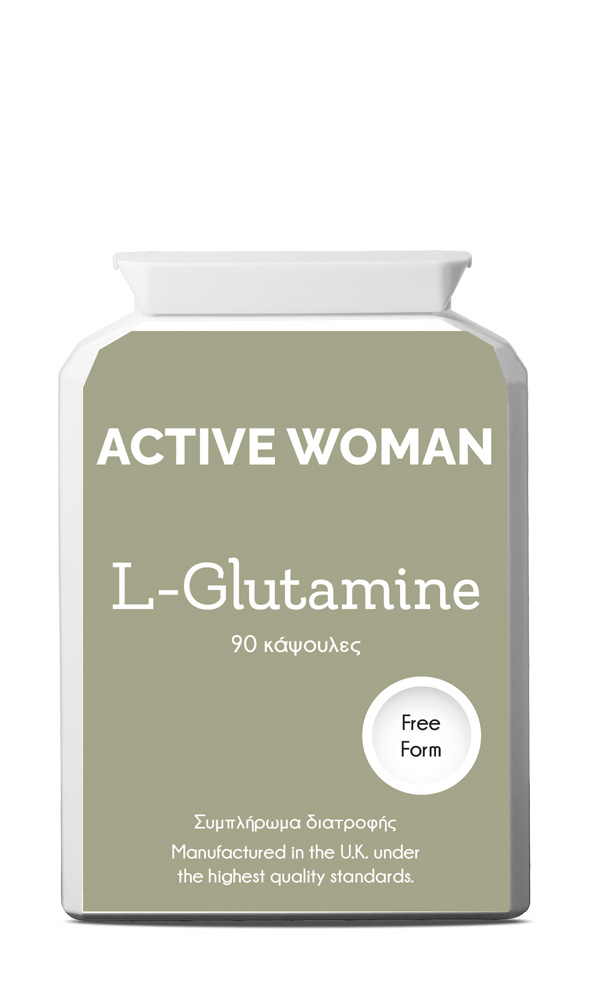
L Glutamine contains free-form L-glutamine, 500 mg per capsule. It is free from gluten and lactose and suitable for vegetarians and vegans. The dose on the pack is 1 to 6 capsules a day, with a glass of water.
Food supplements should not be used as a substitute for a varied and balanced diet and a healthy lifestyle.
Read also
- Probiotics and prebiotics: everything you need to know about the gut
- Gut microbiome analysis at our practice
- Online appointment for a personalised nutrition plan
Frequently asked questions
What does glutamine do?
It is an amino acid used to build proteins and as an energy source for the cells of the gut and the immune system.
Does it help with irritable bowel syndrome?
One study showed a significant benefit in one specific form, after gastroenteritis. For other forms there is not enough evidence.
Does it help muscles?
Studies in athletes show no benefit for muscle mass or performance. Total protein in the diet matters more.
Is it safe?
At usual doses it is generally considered safe for healthy adults. Avoid it without medical advice if you have liver or kidney disease.
Sources
- Zhou Q. et al. Randomised placebo-controlled trial of dietary glutamine supplements for postinfectious irritable bowel syndrome. Gut, 2019.
- Ramezani Ahmadi A. et al. The effect of glutamine supplementation on athletic performance, body composition, and immune function: a systematic review and meta-analysis. Clinical Nutrition, 2019.
- Heyland D. et al. A randomized trial of glutamine and antioxidants in critically ill patients. New England Journal of Medicine, 2013.
This article is for information purposes and is not a medical diagnosis, nor does it replace a doctor’s advice.
