
Berberine has been talked about more and more in recent years, mainly in relation to blood sugar and weight. But what is it, what do studies really show and why is the European Food Safety Authority (EFSA) reviewing it at the moment? In this guide you will find the basics, in plain words.
What berberine is
Berberine is a natural substance (an alkaloid) with a bright yellow colour. It is found in plants such as barberry (Berberis vulgaris, Berberis aristata) and goldenseal. It has been used for centuries in traditional Chinese and Indian medicine.
Today it is studied mainly for the way it affects glucose metabolism. In laboratory studies it activates an enzyme that acts as an «energy sensor» of the cells (AMPK), which is why it is often compared with metformin. The comparison is exaggerated, though: berberine is not a medicine and does not replace one.
Berberine at a glance
| Question | Answer |
|---|---|
| What is it? | A natural alkaloid from plants such as barberry. |
| What is it studied for? | Mainly for blood sugar, blood lipids and weight. |
| Doses in studies | Usually 0.5–1.5 g a day, split into 2–3 doses with meals. |
| Approved EU claims | No. There is no approved health claim for berberine. |
| Safety | Under review by EFSA (see below). |
What the research shows
A large 2022 review pooled 37 clinical trials with more than 3,000 people with type 2 diabetes. Compared with control groups, berberine was linked to:
- a reduction in fasting glucose of about 0.8 mmol/L (about 15 mg/dL),
- a reduction in glycated haemoglobin (HbA1c) of about 0.6 percentage points,
- a reduction in glucose 2 hours after meals of about 1.2 mmol/L.
These results sound encouraging, but they have important limitations. Almost all trials were carried out in China, most lasted up to 3 months, many were of moderate quality and in several berberine was given together with diabetes medication. The higher the blood sugar at the start, the larger the reduction.
There are also studies on cholesterol, triglycerides and weight, with small and not always consistent reductions. Berberine is not a «natural Ozempic», as social media often claims: the differences in weight seen in studies are small.
What applies to safety
In studies, the most common complaints concern the stomach and gut: constipation, diarrhoea, bloating or abdominal pain. Berberine also affects liver enzymes that break down many medicines, so it can change how they work.
In early 2026, EFSA put a draft opinion on the safety of plant preparations containing berberine out for public consultation. In the draft it states that, with the data available, it cannot set a safe daily intake. It points to data gaps, interactions with medicines and findings from laboratory and animal studies.
The final opinion is expected in 2027. After that, the European Commission will decide whether measures are needed, such as maximum levels or warnings on the packaging. Until then, berberine supplements are legally sold in the EU.
6 things worth knowing
- It does not replace medication. If you take diabetes medication, do not change or stop it without your doctor.
- Ask your doctor if you take medication. Especially for blood sugar, blood pressure, blood clotting or medicines that are broken down in the liver.
- Diet matters more. Fibre, less sugar, physical activity and good sleep have a much better-proven benefit for blood sugar.
- Take it with meals. This usually means fewer stomach complaints.
- Formulations differ. Products differ in plant source, content and added ingredients, such as piperine, which increases absorption.
- Do not exceed the dose on the pack. And do not combine several berberine products at the same time.
Who should avoid it
- Pregnant and breastfeeding women.
- Children and adolescents.
- People with diabetes who take medication, without medical supervision.
- People with liver or heart problems.
- Anyone taking medicines that may interact, without asking their doctor.
Berberine in Active Woman products
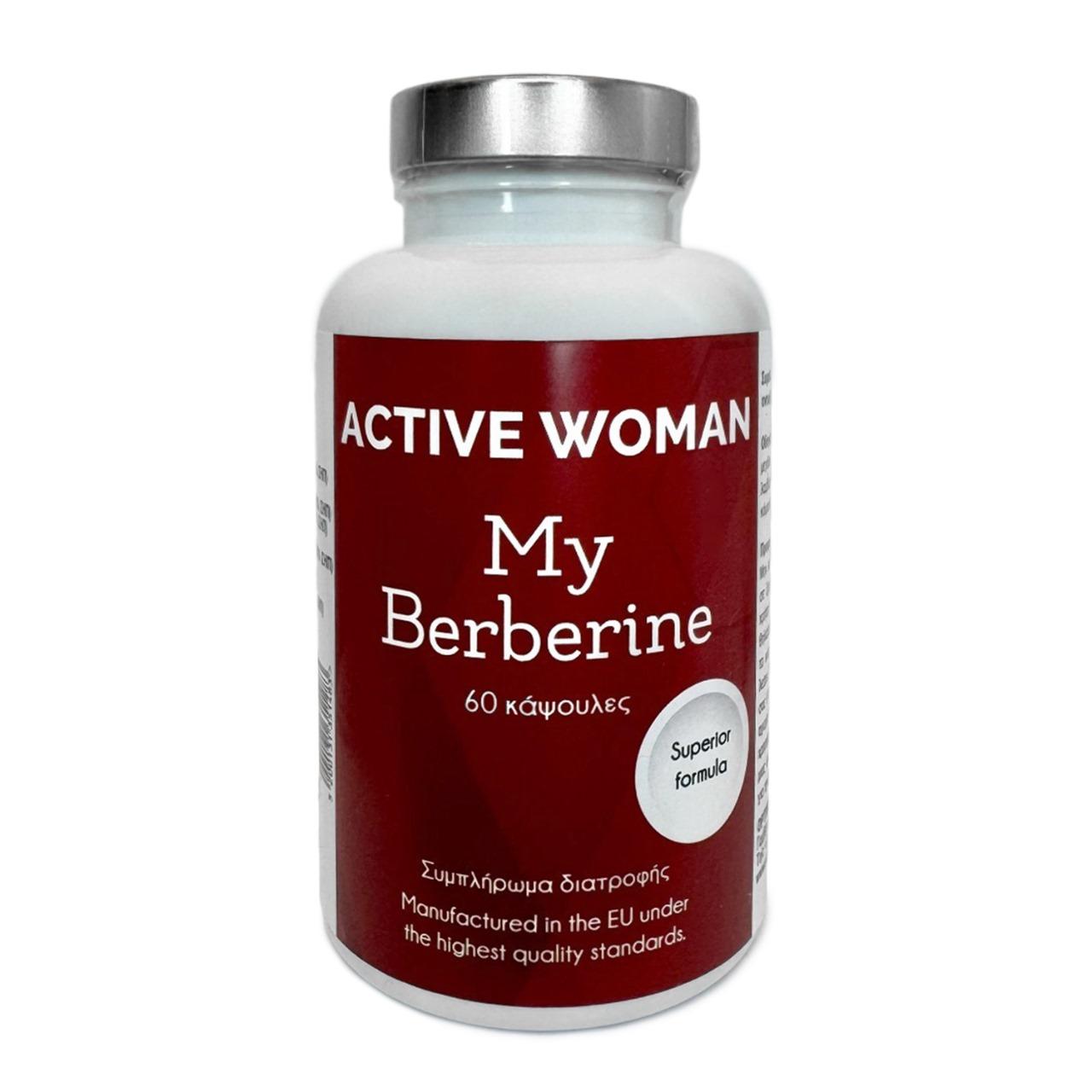
My Berberine contains 400 mg of berberine hydrochloride per capsule, from Berberis aristata extract, together with alpha-lipoic acid, gymnema, Ceylon cinnamon, piperine, vitamin B6, biotin, zinc and chromium. The approved claims relate to the product’s minerals and vitamins, not to berberine:
- Chromium contributes to the maintenance of normal blood glucose levels.
- Zinc contributes to normal carbohydrate metabolism.
- Biotin contributes to normal macronutrient metabolism.
Before you start, read the instructions on the pack and ask your doctor if you take medication. Food supplements should not be used as a substitute for a varied and balanced diet and a healthy lifestyle.
Read also
- Myo-inositol: what research says about PCOS
- Glucomannan: what it is and how to use it correctly
- Metabolism: how it is measured and what supports it
- Online appointment for a personalised nutrition plan
Frequently asked questions
What is berberine?
A natural alkaloid from plants such as barberry, studied mainly for blood sugar.
Does it help with blood sugar?
Studies in people with type 2 diabetes show a moderate reduction in glucose and HbA1c, but most are small and short. It does not replace treatment.
Does it help with weight loss?
The differences in weight in studies are small. The foundation remains diet and physical activity.
Is it safe?
The most common complaints concern the gut. EFSA is reviewing it and did not set a safe daily intake in its draft opinion. Avoid it during pregnancy and breastfeeding and ask your doctor if you take medication.
Can I take it with metformin?
Only with your doctor’s approval, because the risk of low blood sugar may increase.
How long does it take to see results?
In studies, results were usually measured after 8–12 weeks.
Sources
- Xie W. et al. Glucose-lowering effect of berberine on type 2 diabetes: A systematic review and meta-analysis. Frontiers in Pharmacology, 2022.
- EFSA. Call for data: scientific opinion on the safety of plant preparations containing berberine.
- UK Committee on Toxicity. Draft scientific opinion on the safety of plant preparations containing berberine, 2026.
- NutraIngredients. Safety in question: what is the future of berberine?, 2026.
- Regulation (EU) 432/2012. List of permitted health claims.
This article is for information purposes and is not a medical diagnosis, nor does it replace a doctor’s advice.
