
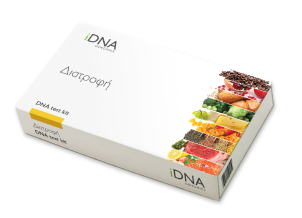
The nutrition DNA test is a test that shows how your body may respond to specific nutrients and foods. It is not a «magic recipe» or a diagnosis. It is an additional tool that, together with your history, measurements and habits, helps the dietitian create a more personalised programme. In this guide you will see what it examines, what it cannot show, how it is done from home and how the results are used.
What nutrigenetics is
The DNA of all people is almost identical. But there are small variations, the so-called genetic polymorphisms, that make each of us a little different. Nutrigenetics studies how some of these variations are linked to the way the body handles food.
Two well-known examples from the literature:
- Lactose: variations near the lactase gene are associated with whether the enzyme that breaks down lactose remains active in adult life.
- Caffeine: variations in the CYP1A2 gene are associated with how quickly or slowly caffeine is metabolised.
The science is still evolving. For many traits, such as weight, each gene has a small effect and lifestyle plays the leading role.
What the nutrition DNA test examines
At our office we have offered iDNA Genomics tests since 2016, in three versions:
| Test & price | What it examines |
|---|---|
| iDNA Nutrition Test €120 |
11 categories: weight management (carbohydrates, proteins, fats, snacking between meals, biological clock), cardiometabolic health (salt, saturated fats, omega-6/omega-3 ratio) and food sensitivities (caffeine, lactose, gluten) |
| iDNA Test Vitamins & Trace Elements €60 |
12 categories: vitamins A, B6, B9, B12, C, D, E, calcium, iron, magnesium, antioxidant needs, detoxification capacity and omega-6/omega-3 ratio |
| iDNA Test 3 in 1 €250 |
37 categories in 3 parts: Nutrition (14), Vitamins & Trace Elements (12) and Sport (11) |
What the DNA test does not show
To have the right expectations, it is just as important to know what a nutrition DNA test does not do:
- It is not a diagnosis. It shows genetic tendencies, not certainties.
- It does not diagnose lactose intolerance or coeliac disease. For these you need a doctor and specific tests.
- It does not replace blood tests. DNA does not show your current levels of vitamins or iron, only a possible tendency.
- It does not «determine» your weight. Weight and health are mainly affected by diet, exercise, sleep and lifestyle.
How it is done, step by step

- You choose the test that suits you and order it.
- You receive the sampling kit.
- At home, in 1–2 minutes, you take a saliva sample from the inside of your cheek with a special cotton swab.
- You send the sample to the laboratory. Shipping within Greece is free.
- The results are sent to you electronically within 20 working days of the sample being received.
- You book an appointment for their interpretation, at the office or online.
Because DNA does not change during life, the test is done once.
How the results are used in your programme
The results are not read on their own. The dietitian combines them with:
- your medical history and recent tests,
- measurements such as body fat measurement and metabolic measurement,
- your eating habits, your daily schedule and your goals.
For example, a tendency towards increased caffeine sensitivity may lead to a discussion about the amount and timing of coffee. An unfavourable tendency in the omega-6/omega-3 ratio may lead to an emphasis on foods such as oily fish and nuts. The final recommendation is always personalised and realistic for your everyday life.
Who a nutrition DNA test makes sense for
A DNA test is not necessary to lose weight or eat a more balanced diet. But it can be useful if:
- you have tried various programmes and want a more personalised approach,
- you are interested in better understanding your tendencies regarding carbohydrates, fats or salt,
- you wonder whether coffee or dairy «suit» you and want a starting point for discussion with the dietitian,
- you exercise regularly and want a picture of your athletic profile (in the 3 in 1).
In any case, the most important step remains a programme you can follow consistently. Your DNA does not change, but your habits do, and that is where the biggest difference lies.
Which test should I choose?
| If you are interested in… | Recommended test |
|---|---|
| Weight management, fats, carbohydrates, food sensitivities | iDNA Nutrition Test |
| Vitamin and trace element needs | iDNA Test Vitamins & Trace Elements |
| A complete picture, including athletic profile | iDNA Test 3 in 1 |
If you are not sure, see the page DNA Test or ask us at your appointment.
Personal data
The analysis is carried out by iDNA Genomics and its partner laboratories. According to iDNA, the sample is destroyed after the quality control of the results. The processing of genetic data is governed by the General Data Protection Regulation (GDPR).
Frequently asked questions
Do I need to repeat the DNA test?
No. DNA does not change during life, so the test is done once.
How is the sample taken?
With a special cotton swab from the inside of the cheek. It is painless and takes 1–2 minutes.
How long until the results are ready?
Within 20 working days of the laboratory receiving the sample. They are sent to you electronically.
Does it show whether I have lactose intolerance or coeliac disease?
No. It only shows a genetic tendency. For a diagnosis of intolerance or coeliac disease, see a doctor.
Can a child take the test?
The test is intended for adults.
Can I have the interpretation online?
Yes. You can book an online appointment by video call for the interpretation of the results.
Read also: Gut microbiome: what it is, what affects it and 6 eating habits
Sources
- Floris M. et al. Direct-to-Consumer Nutrigenetics Testing: An Overview. Nutrients, 2020.
- National Human Genome Research Institute (NHGRI). Direct-to-Consumer Genetic Testing FAQ.
This article is for information purposes and is not a medical diagnosis, nor does it replace a doctor’s advice. The DNA test is for advisory purposes only.